Almost every museum, hotel and winery now has a virtual tour. Yet many of them are opened once, clicked two or three times and abandoned. The reason is rarely technical: the images are sharp, the navigation works. What is missing is a story. This article explains why virtual tour storytelling makes the difference between a digital brochure and an experience people remember, and how to build a narrative into a tour from the very first capture.
The problem with the "empty" virtual tour
A traditional virtual tour is a set of rooms connected by arrows. It answers the question "what does this place look like?" and nothing more. The visitor lands in a lobby, does not know where to look, clicks on a couple of hotspots and leaves.
Agencies that build tours every day see this pattern clearly. One hotel tour specialist, analyzing its own projects, reports that when visitors are free to choose, 61% of first clicks go to the room interior and only 6% to the lobby, and that the opening scene is often exactly that lobby. In another case it describes, a resort tour rebuilt with fewer scenes, a stronger opening view and rewritten labels saw average sessions grow from 47 seconds to over 3 minutes. These are data from a single vendor and should be read as indications, not laws. But the lesson is consistent: people do not stay for the space, they stay for the reason to explore it.
What storytelling means in a virtual tour
Storytelling does not mean adding a long text or a voice reading a brochure. In an immersive space, a story is made of a few simple ingredients:
- A point of view. Who is guiding us? The winemaker, the archaeologist, the hotel chef, a child of the village? A tour told by someone feels very different from a tour told by no one.
- A sequence. Even in a space you can explore freely, there is a "first, then, finally". The order of scenes creates expectations and rewards.
- A discovery. Every good story has a moment of surprise: a hidden room, a view that opens up, a detail that changes the meaning of what we saw before.
- An ending that leads somewhere. A booking, a visit, a purchase, a newsletter. A story without an ending leaves the visitor in the middle of nowhere.
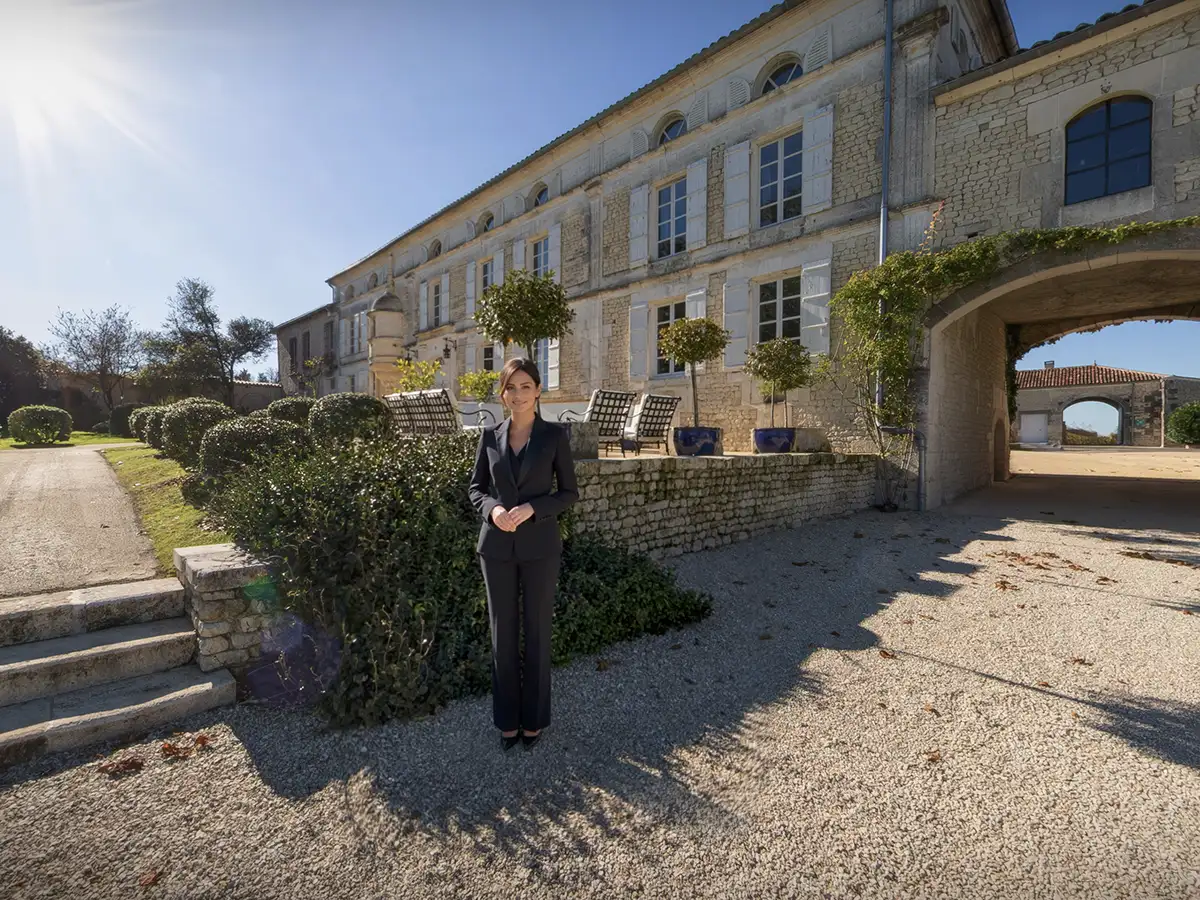
Guided or free? The answer is both
One of the most common doubts is whether a tour should be a guided path or open exploration. The research suggests that the best experiences combine the two. A 2026 study by the Hong Kong University of Science and Technology compared a human-led tour with an on-demand AI guide in an outdoor mixed reality exhibition. Visitors with the on-demand guide rated immersion and access to explanations higher and roamed more freely, but they also reported more effort in managing their own pace and questions. The sample was small, but the indication is useful: people love freedom, as long as someone is there when they need direction.
In practice, this means designing a main path that tells the story in a few minutes, with optional detours for those who want to go deeper. The visitor who has two minutes gets the essential, the curious one finds more.
The tools of immersive storytelling
The opening scene is the hook. Do not start at the entrance. Start at the most emotional point: the sunset over the vineyard, the frescoed hall, the terrace overlooking the sea. The first ten seconds decide whether the visitor stays.
Voice and sound. A short narrated introduction, ambient sounds of the place, a piece of music that sets the tone. Sound is one of the strongest triggers of presence and costs very little compared with images.
People, not just spaces. Empty rooms are beautiful but cold. A short clip of the chef at work, the craftsman in the workshop or the guide in the museum turns a place into a story. The same agency reports that short embedded video clips of 8 to 15 seconds increase hotspot engagement.
Layers of time. This is where immersive technology is unbeatable. The same scene can show the ruin as it is today and the reconstruction of how it was, the vineyard in winter and at harvest, the construction site and the finished building. Moving between "then" and "now" is a narrative device that no photo gallery can offer.

Few, well-chosen points of interest. Twenty hotspots with technical captions are noise. Eight or ten, each with something to say, are a story.
Context-aware calls to action. The invitation to act works best where the emotion is. According to the same hotel data, a "check availability" button placed inside the room scene performs about four times better than on the homepage.
Three examples of narrative structure
A museum or archaeological site. The protagonist is the place itself through time. The tour opens on the most iconic view, then follows the life of a person who lived there, shows reconstructions next to the current state and ends with practical information to plan the real visit.
A hotel or resort. The story is "a perfect day". It starts at sunrise from the room balcony, moves to breakfast, the pool, the spa, the restaurant at sunset, and ends at night on the terrace, with a booking button right there.

A company or a winery. The story is the process: from the raw material to the finished product, told by the people who make it. The visitor walks through the vineyard, the cellar, the bottling line and the tasting room, and finishes with the invitation to book a visit or buy online.
Five questions to ask before the first capture
Storytelling is not added at the end: it is planned before shooting. Before any capture day, it helps to answer five questions:
- Who is the audience? Tourists, students, investors, buyers?
- What should they feel or understand at the end of the tour?
- Who tells the story and with which voice?
- What is the path in a few key scenes, and where are the detours?
- What should the visitor do next, and where do we ask for it?
The answers become a simple storyboard that guides the capture, the editing and the interface. It saves time on set and avoids the most common mistake: capturing everything and telling nothing.
Technology has become a commodity. Anyone can capture a 360 panorama or a Gaussian splat. The real value is in deciding what to show, in which order, and why.
Measuring the story
A narrative tour can and should be measured. The indicators are simple: time spent, percentage of visitors who reach the end of the main path, the most visited detours, clicks on the final call to action. These numbers show where the story works and where it loses its audience, and they make every update better than the previous one. Industry reports on the future of immersive experiences agree on this point: storytelling and data are two sides of the same design process.
From a place to an experience
A virtual tour without a story shows a place. A virtual tour with a story makes people want to be there. The difference is not in the camera, but in the editorial work before and after it. If you have a tour that is not performing, or you are planning a new one, contact us: we can help you turn it into an experience worth telling.